
cidokom, indonesia
saung belajar
Project Build Length: 8 Weeks
Project Leaders: Clara Calladine, Dima Ba Al-Bayati, Tom Hall and Amiera Sufyan
Project Partners: STF UIN CERCONDESO
Local Participants: Bang Yadi
International Participants: Michelle Krebs, Magdalena Scholle, Giada Luna Hermann, Chelsea Kaye Baladad, Su Yi Mon, Ayla Sanders, Ella Boyce, Emily Brister Runnacles, James Bearman, Faheem Kathawala, Aoife Lauerman, Sandra Debicka, Richard Walker, Manon Vergeylen, Maisy Record, Ben Ashmore, Lavanya Soparkar, Sabah Humayun, Ieme Van Damme Maria Ali, Nibras Mohamed, Jim Arthur Wyatt Gosebruch
Photographs: Clara Calladine and Dima Ba Al-Bayati
Engineers: Buro Happold
Our Services: Community Consultation, Brief Development, Site Analysis, Full Design, Construction, Project Management, Educational Workshop Delivery.


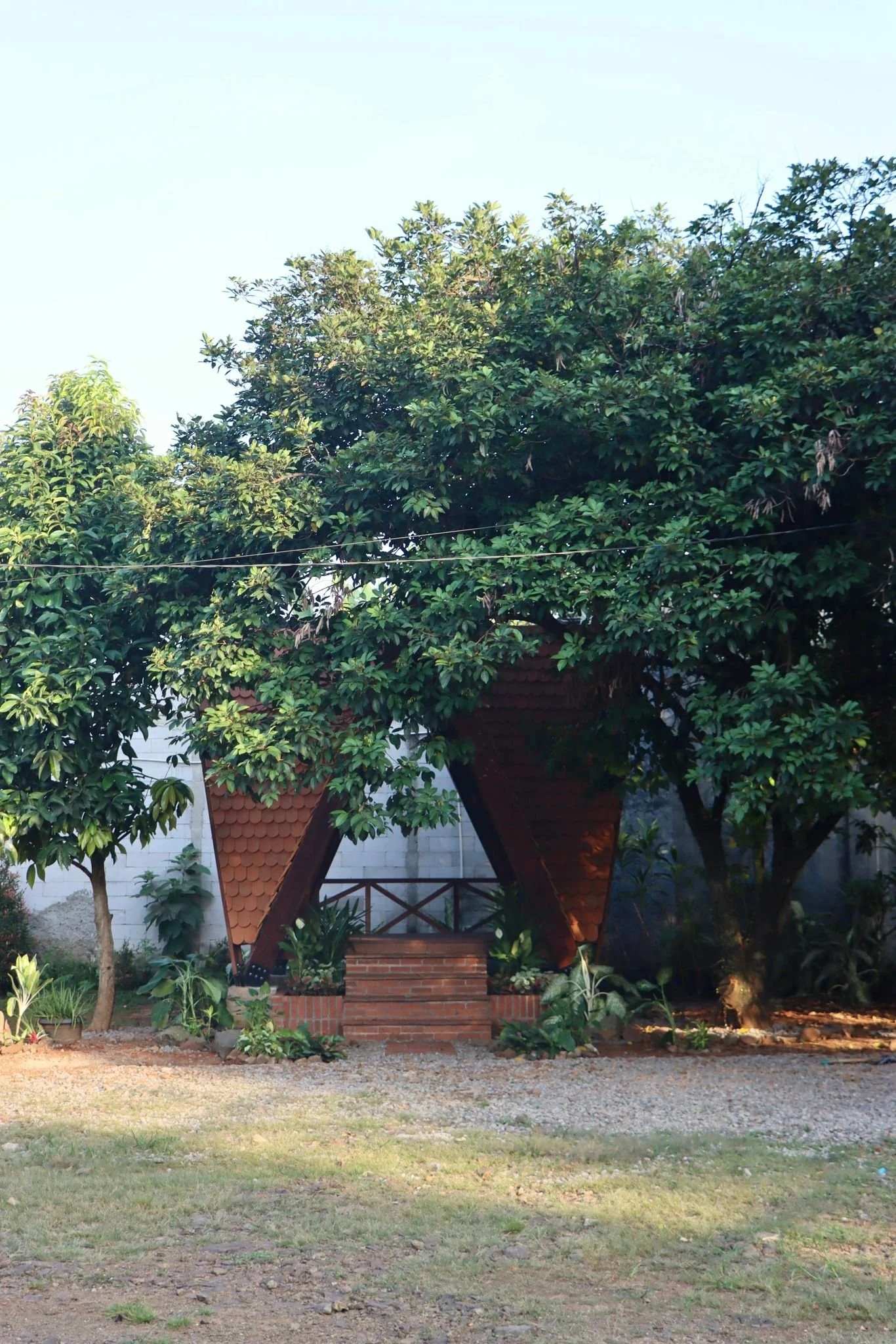
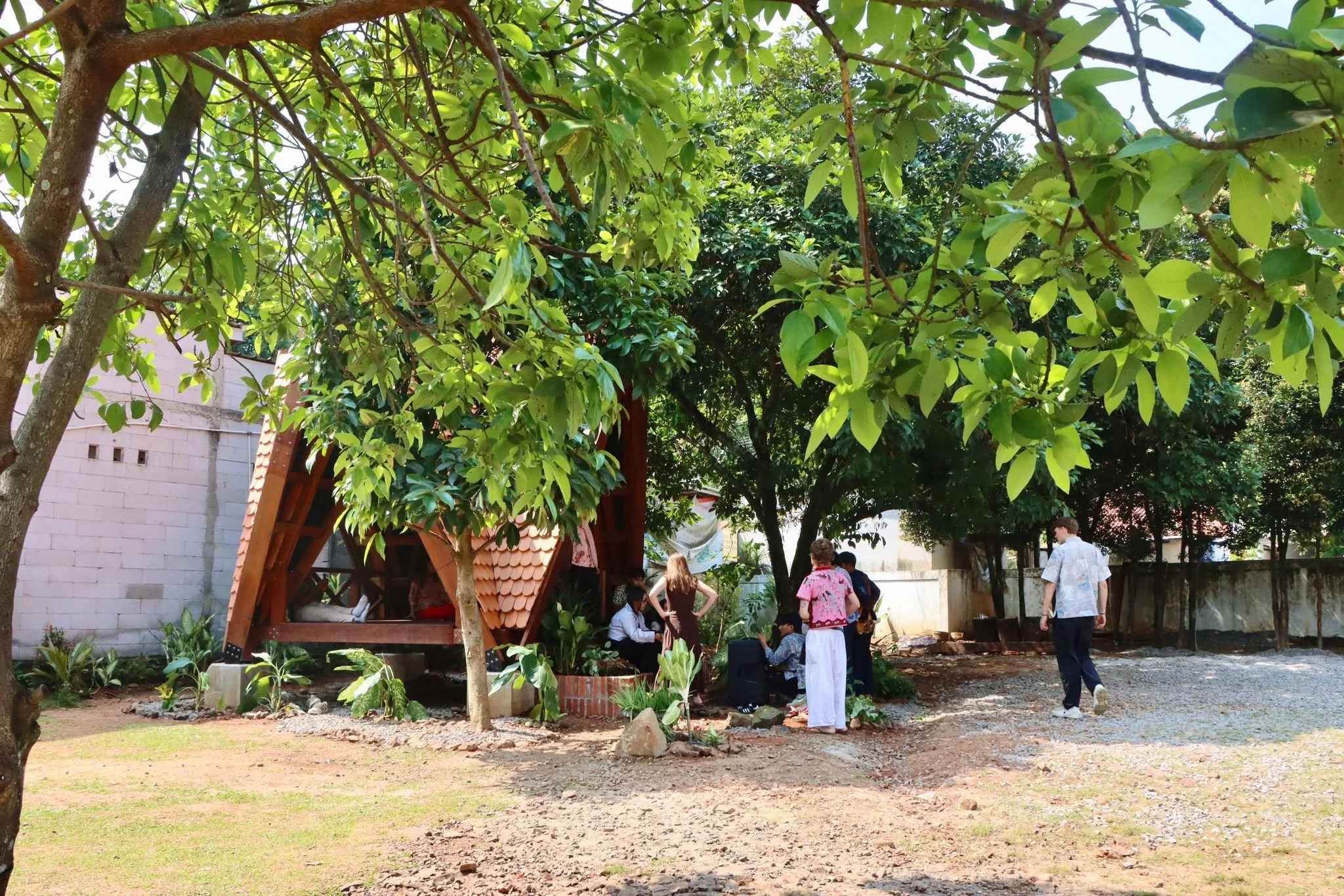
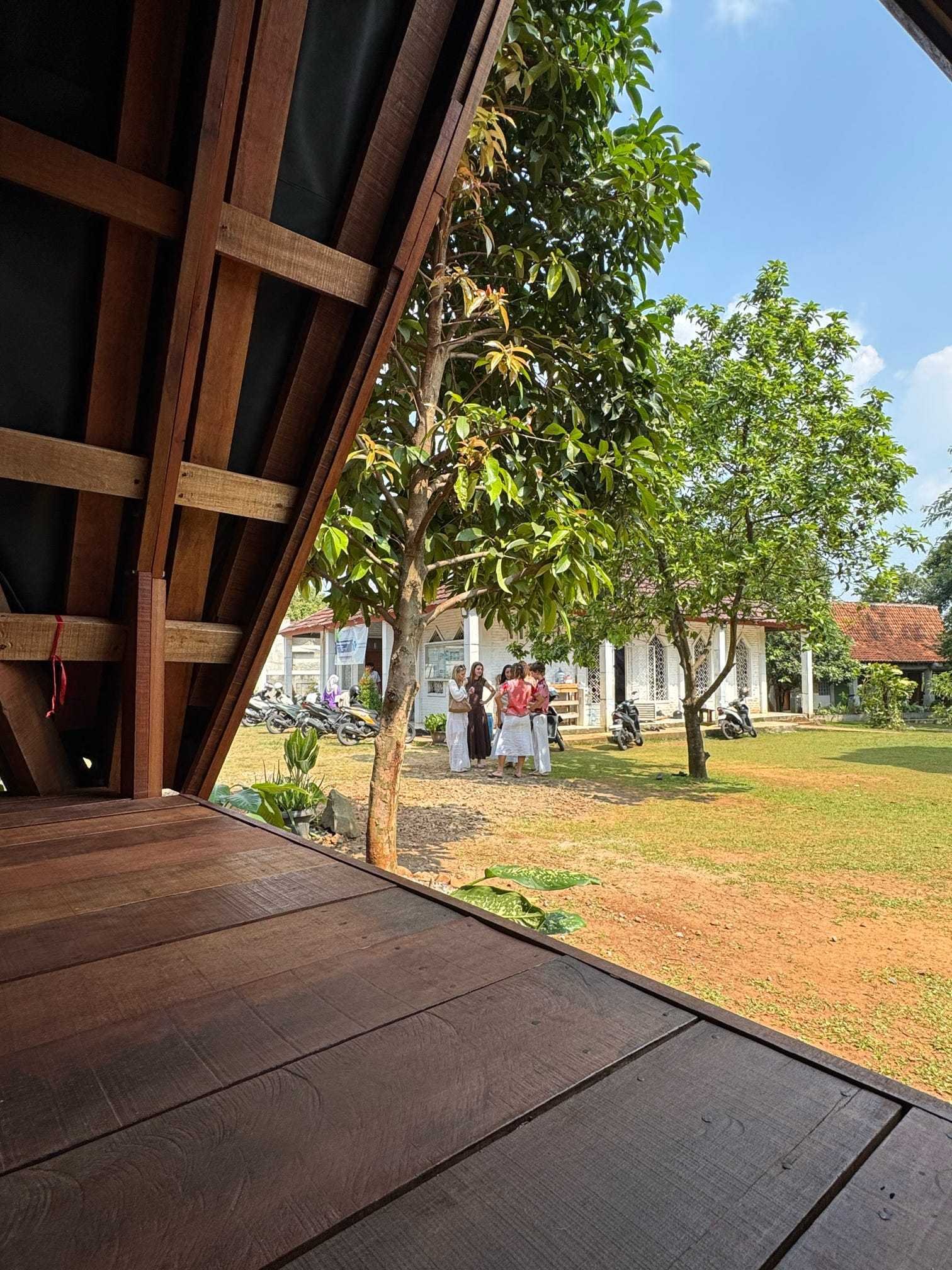
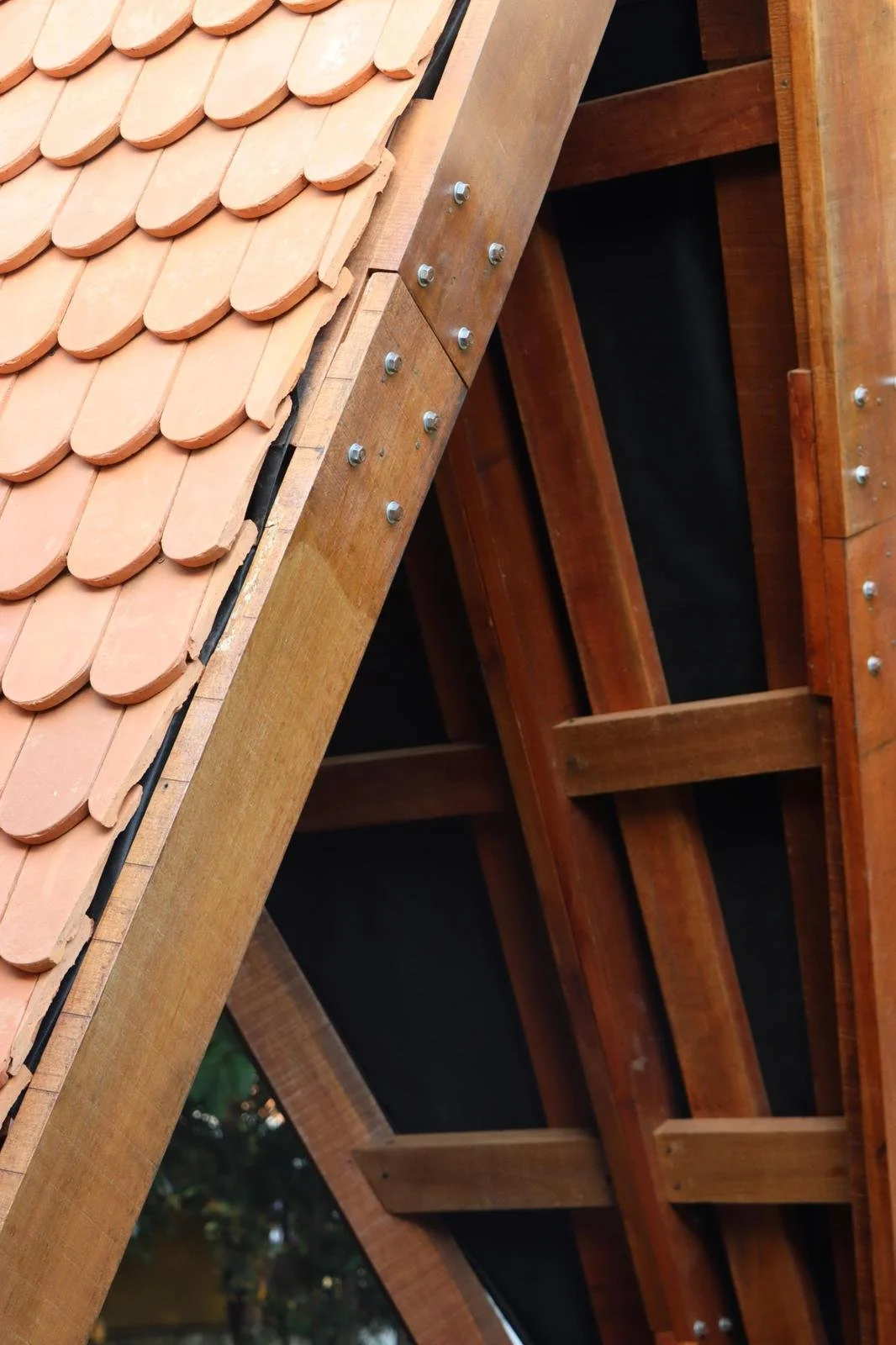
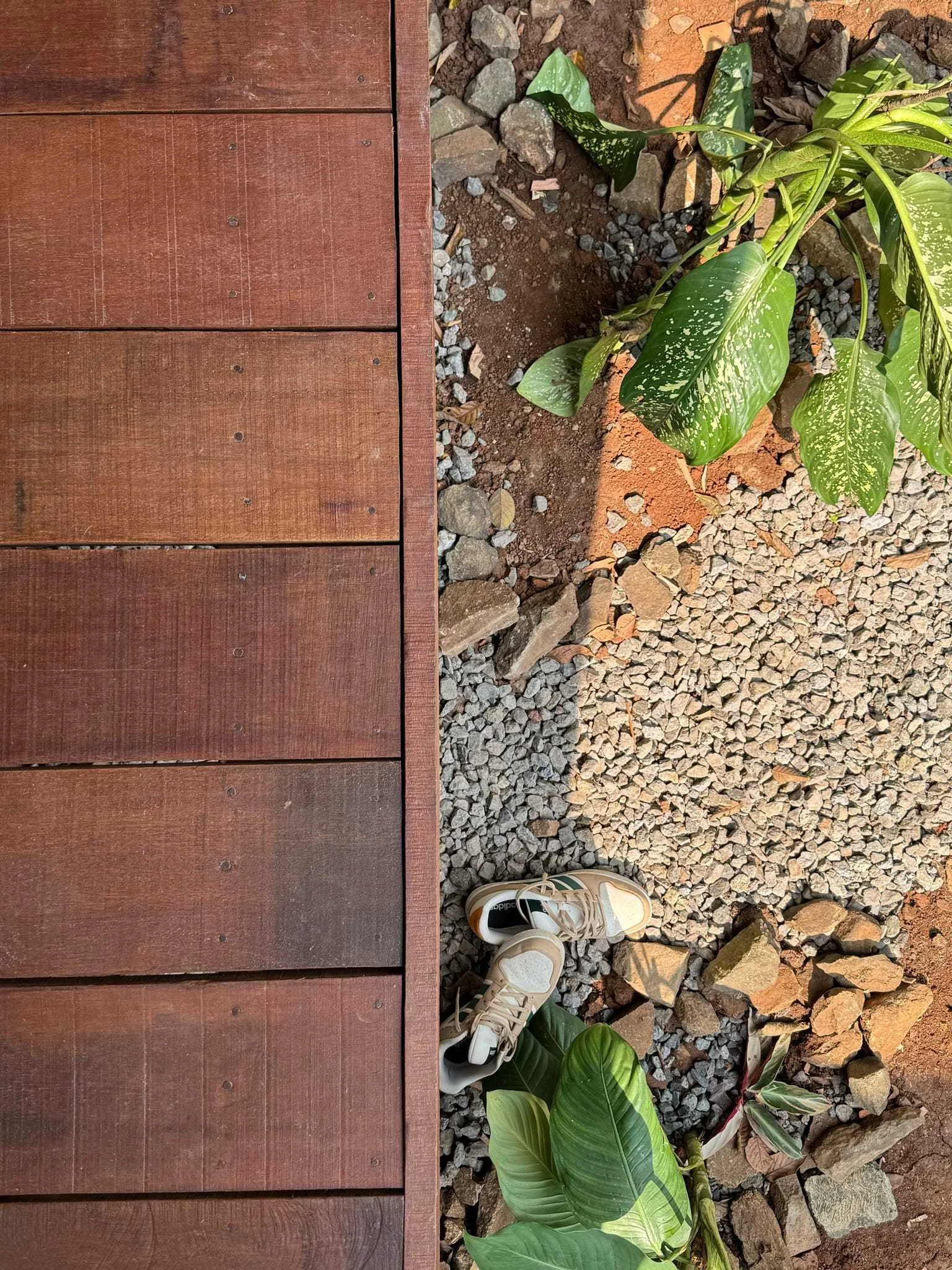
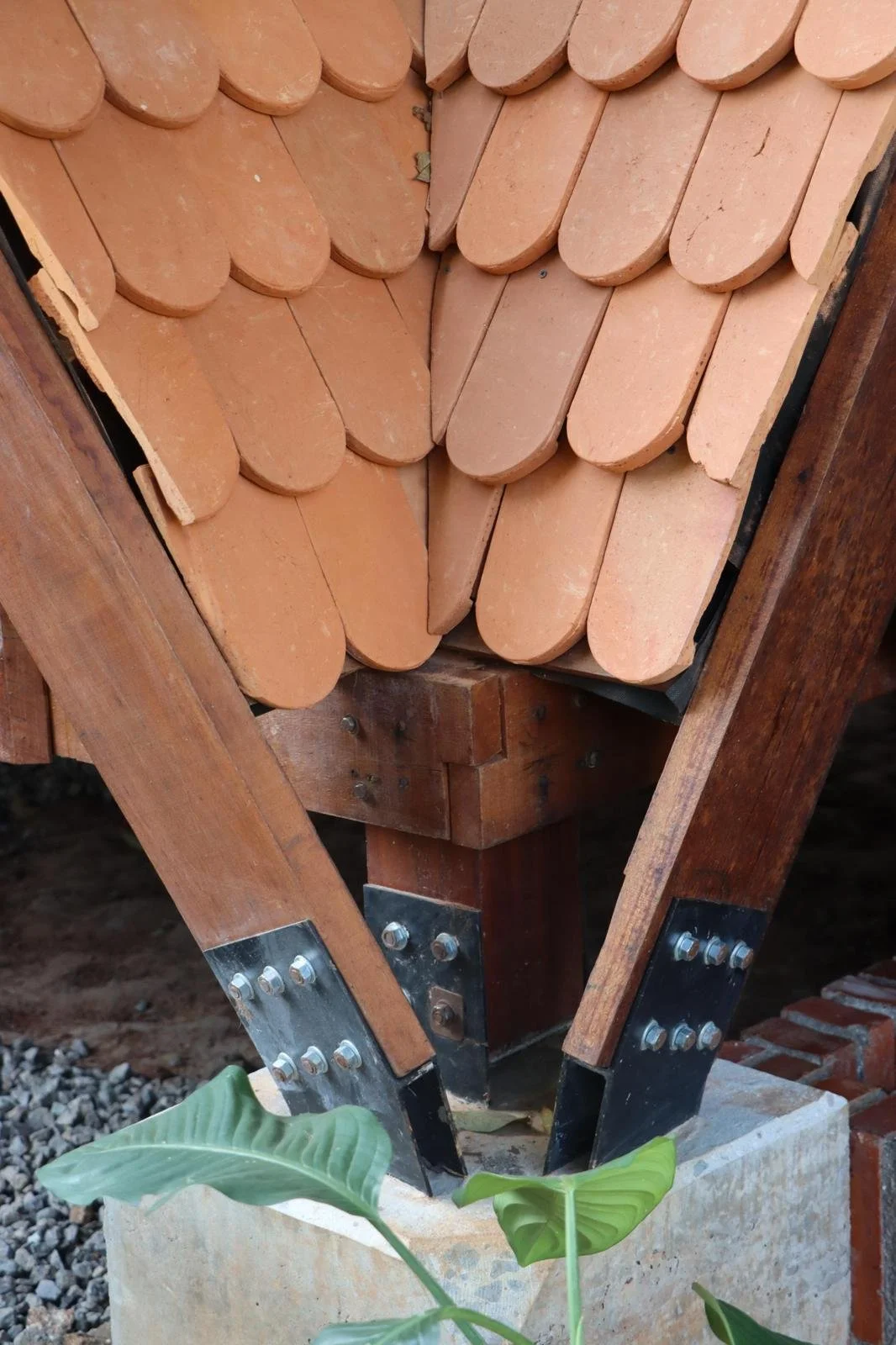
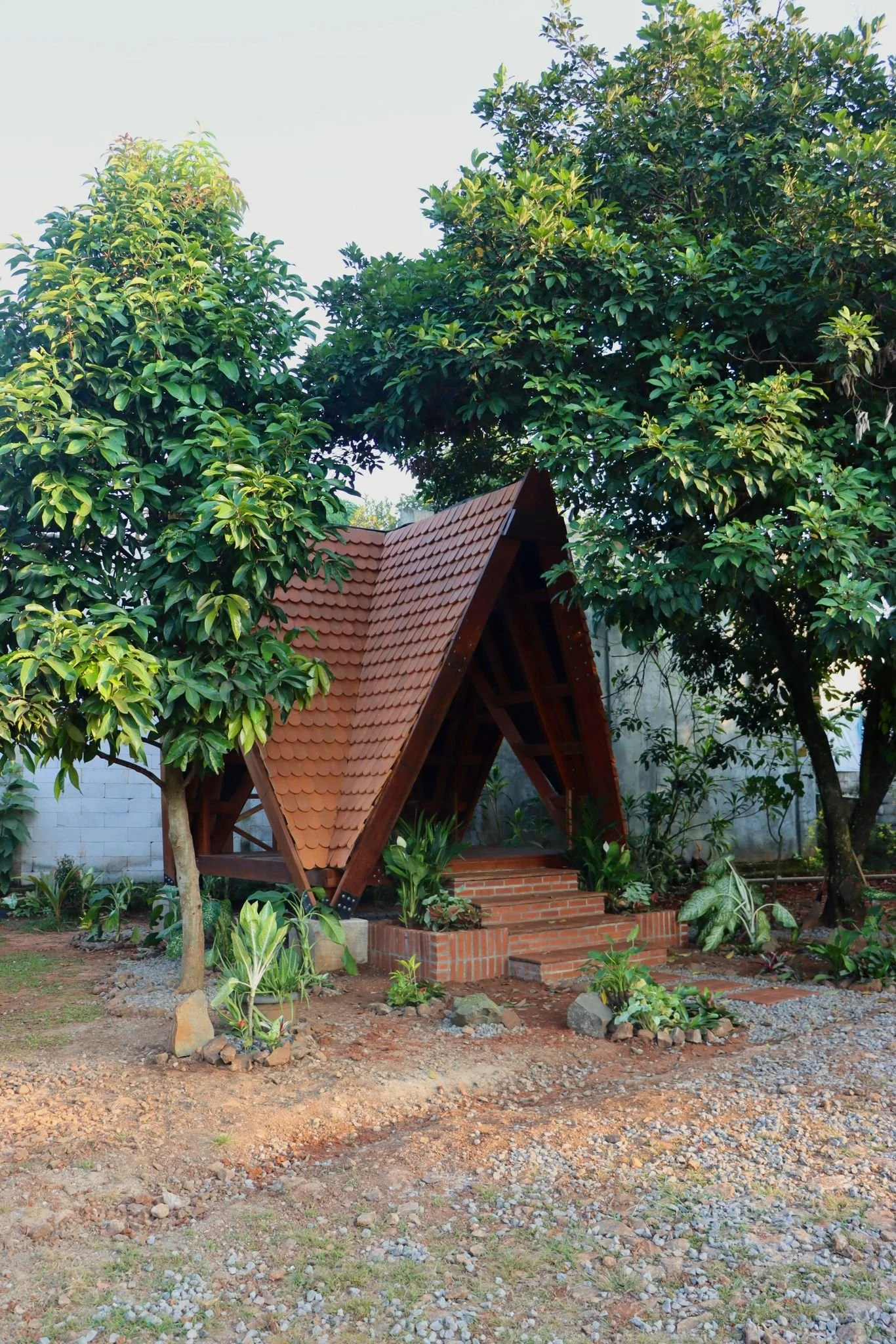
At the CERCONDESO site in Cidokom, creating access to education, entrepreneurship and resources are the heart of all that STF UIN want to achieve. The site is a community-run and owned space that uses educational and commercial activity to better the lives of those around it.
Having completed two projects on site in 2022 and 2024 we collaborated with STF UIN once again to extend the workshops and services they are able to deliver; but with a specific focus on smaller, breakout group learning spaces.
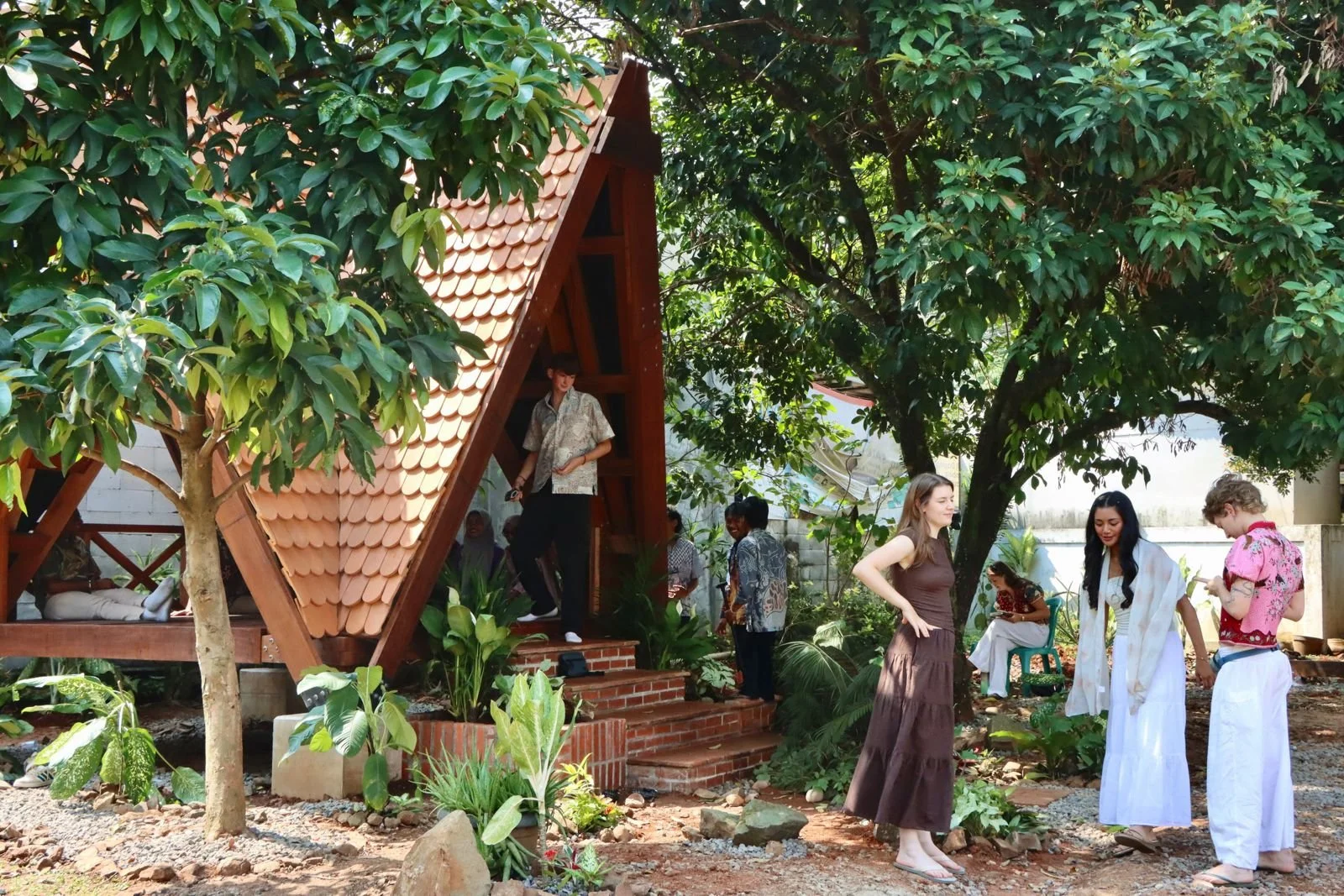
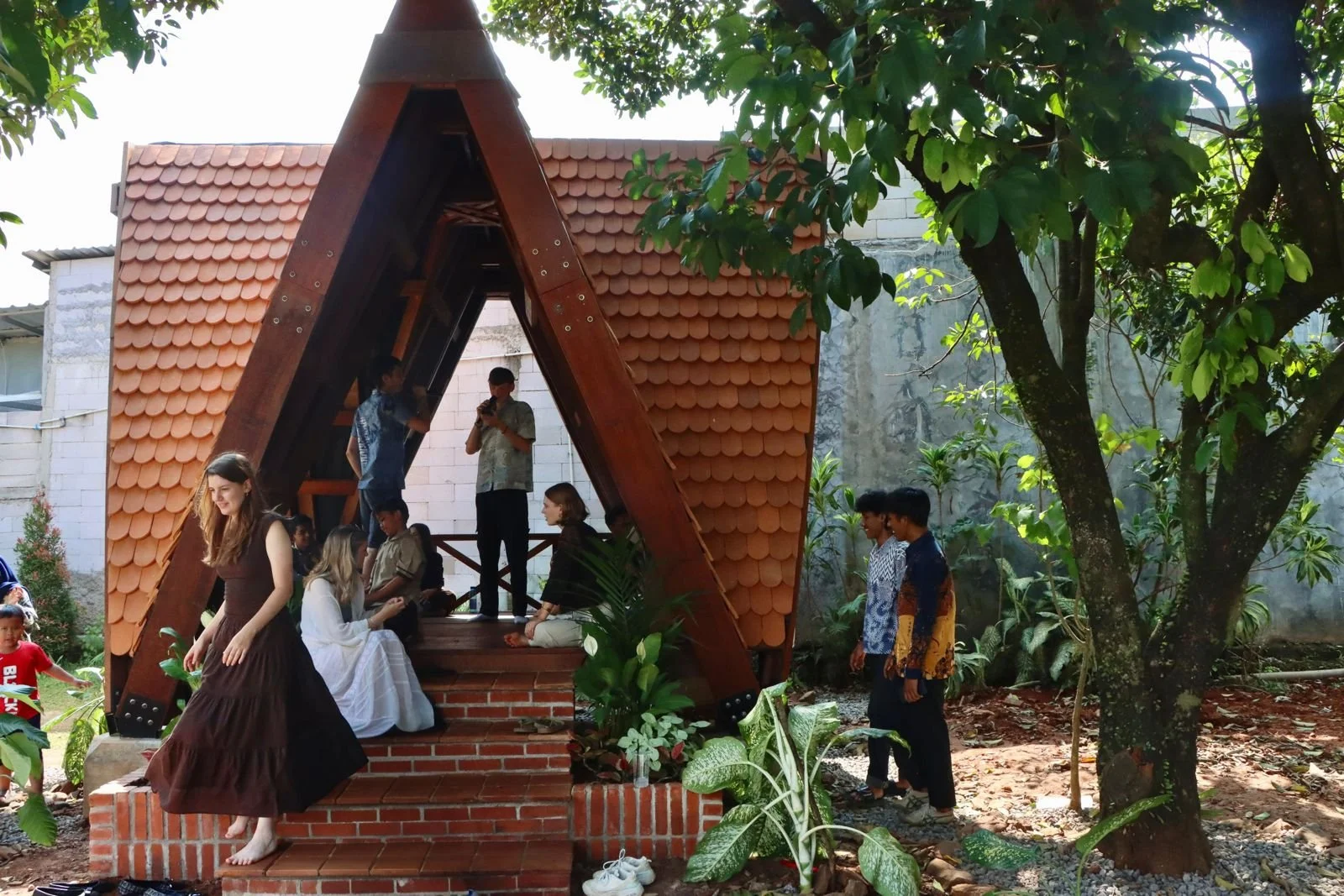
Traditionally a Saung is a sheltered outdoor space that provides small groups of workers to rest and recooperate, away from the sun, rain and heat. This modest structure has deep rooted history and is an architectural typology that is known throughout all of Indonesia and south East Asia. The Saung Belajar - translating as ‘Study Hut’ - takes a modern and education slant on the worker’s shelter.
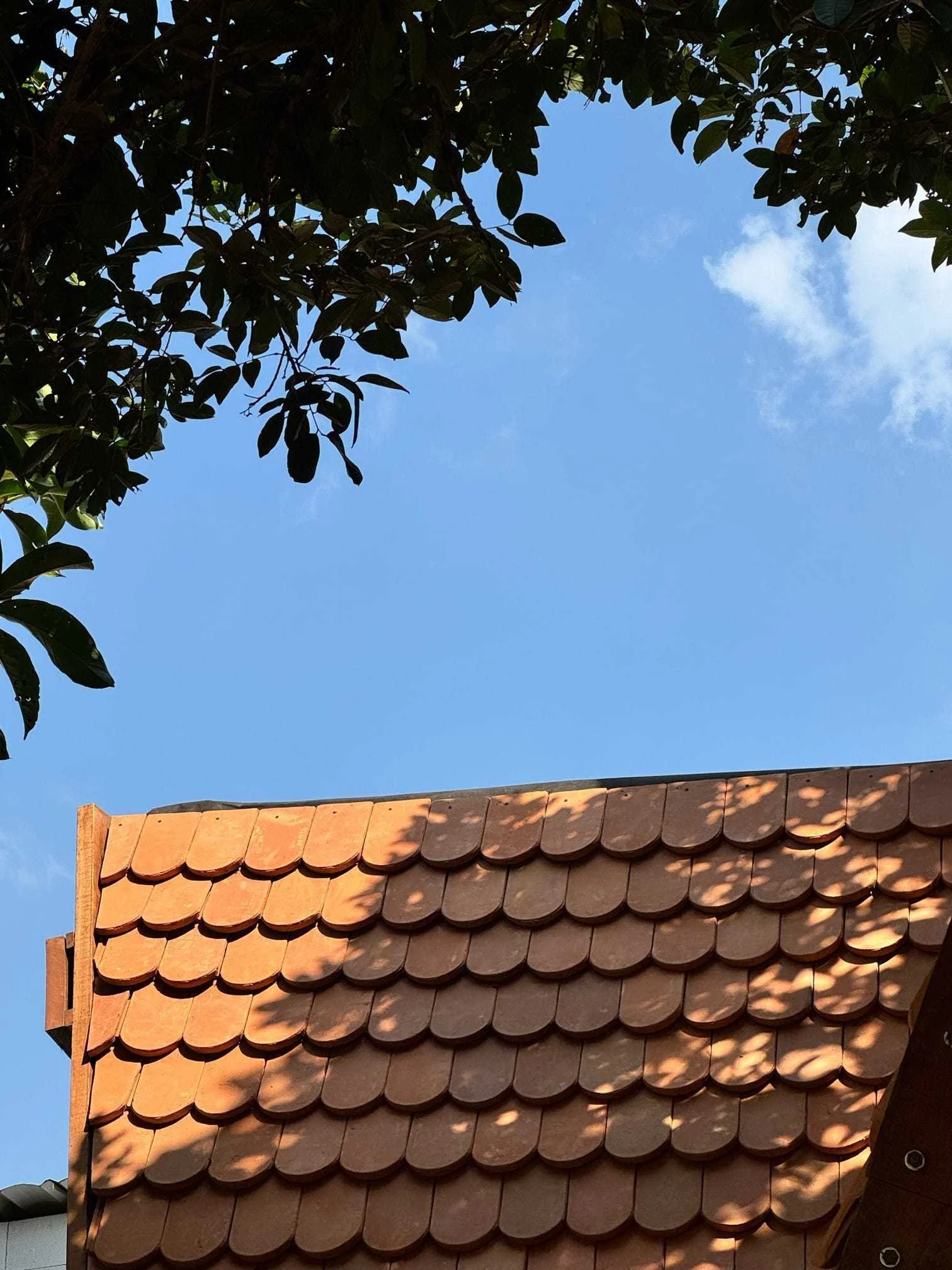
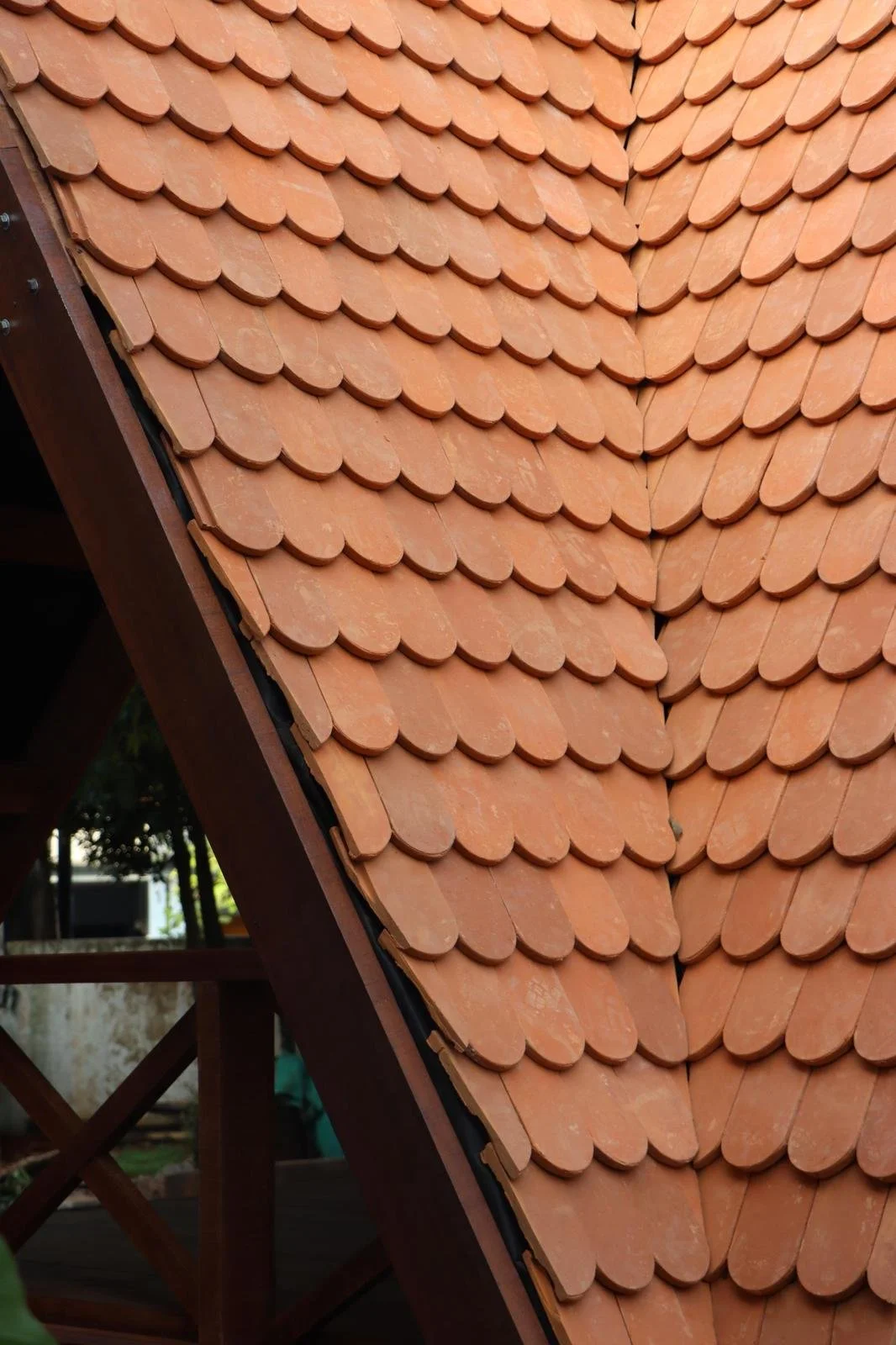
Aligning with the previous builds on site, the materiality of the saung, is that of locality and longevity. A saung is traditionally built of temporary or leftover materials and lives a relatively short lifespan before being replaced or rebuilt. Our approach, with the charity, was to take the teachings and intentions of the sheltered pavilion but making it far more robust, providing a more usable space for a much longer period of time.
Sitting naturally between a few of the larger trees, towards the front of the site, the project strikes a very visible and eye-catching silhouette to the main road, passing the site. It is orientated towards the main workshop and meeting building; creating both a visual and physical connection between different learning groups. Being towards the front of the site also allows for passers by or parents collecting children to sit and relax as they do so.
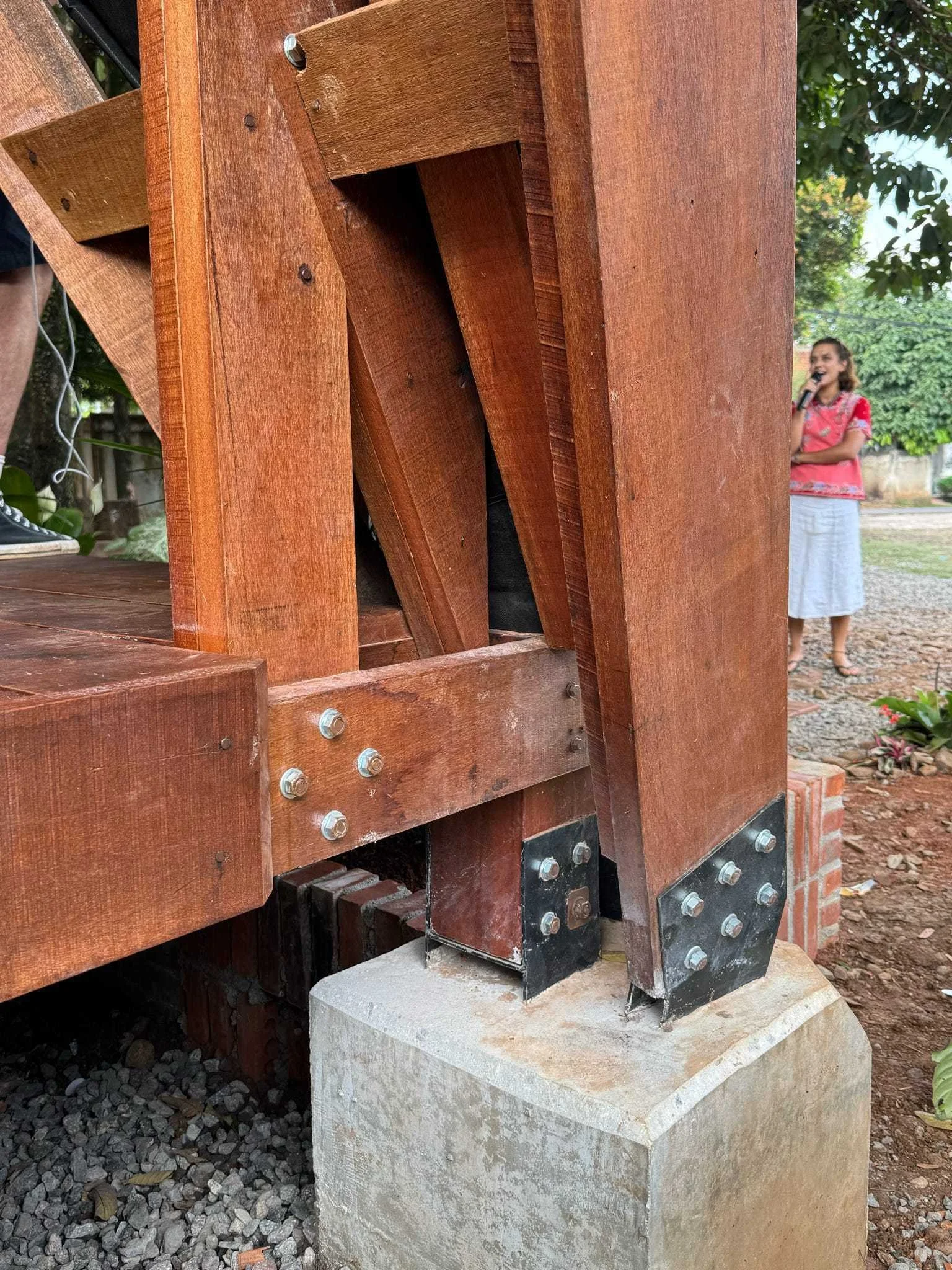
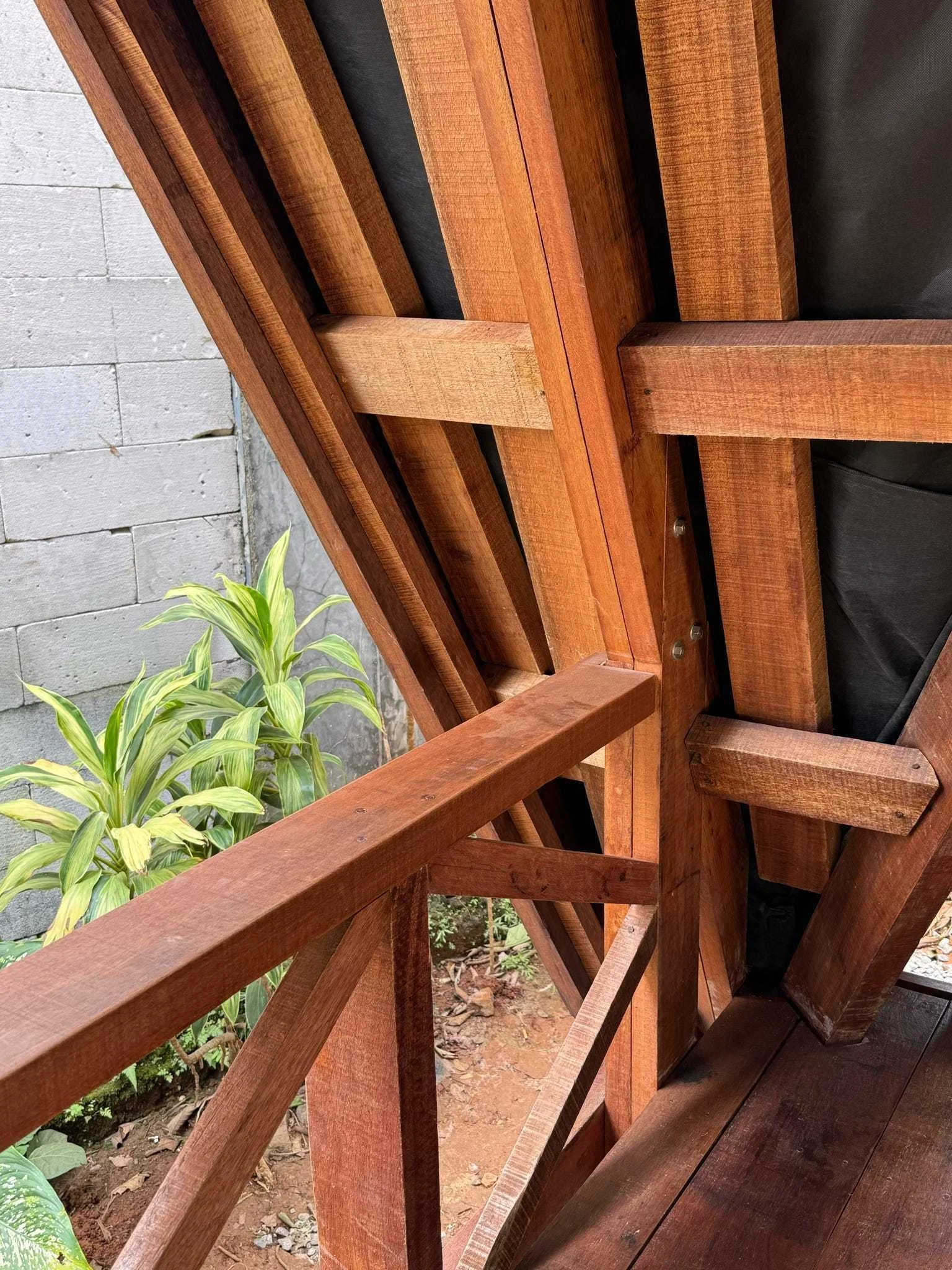
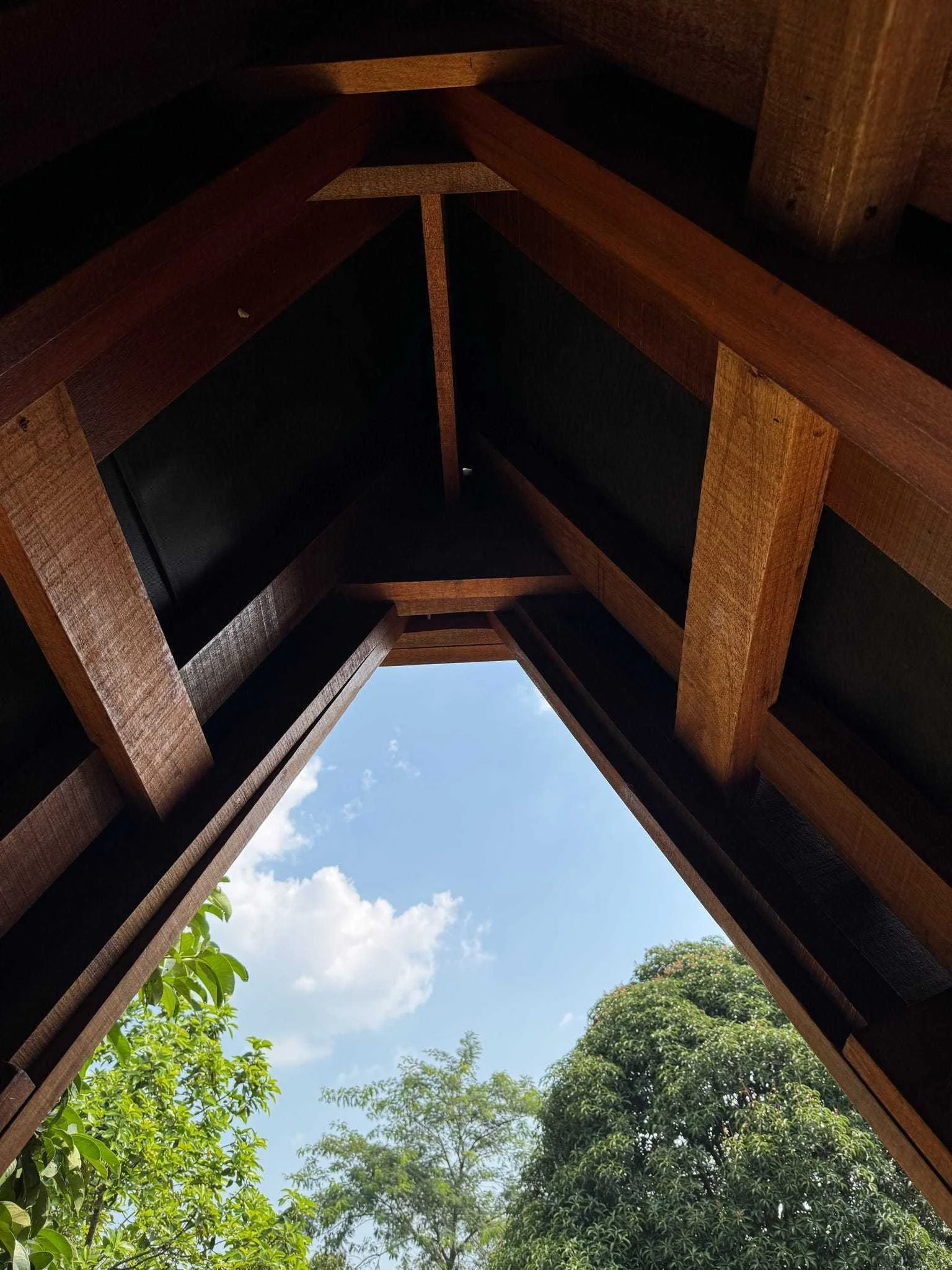
Structurally, the pavilion is one of an interlinking timber frame construction. Each of the four sides has a vertical frame coupled with a leaning porch frame - this helps not only to extend the sheltered space, but also connect back to the traditional roof forms locally. The decision to keep the structure open on each side allows for increase cross ventilation throughout the hot Indonesian days. In the centre of the plan, two further frames are rotated and intersecting across the middle of the space. Supporting one another and the central ridge means that the small pavilion benefits from an unobstructed space below.
Built with sustainability and longevity in mind, the structures incorporate materials sourced locally, including the timber itself. The structure is raised off the ground, accounting for the heavy rainfall and flooding groundwater, with masonry steps connecting the pavilion to the earth below.
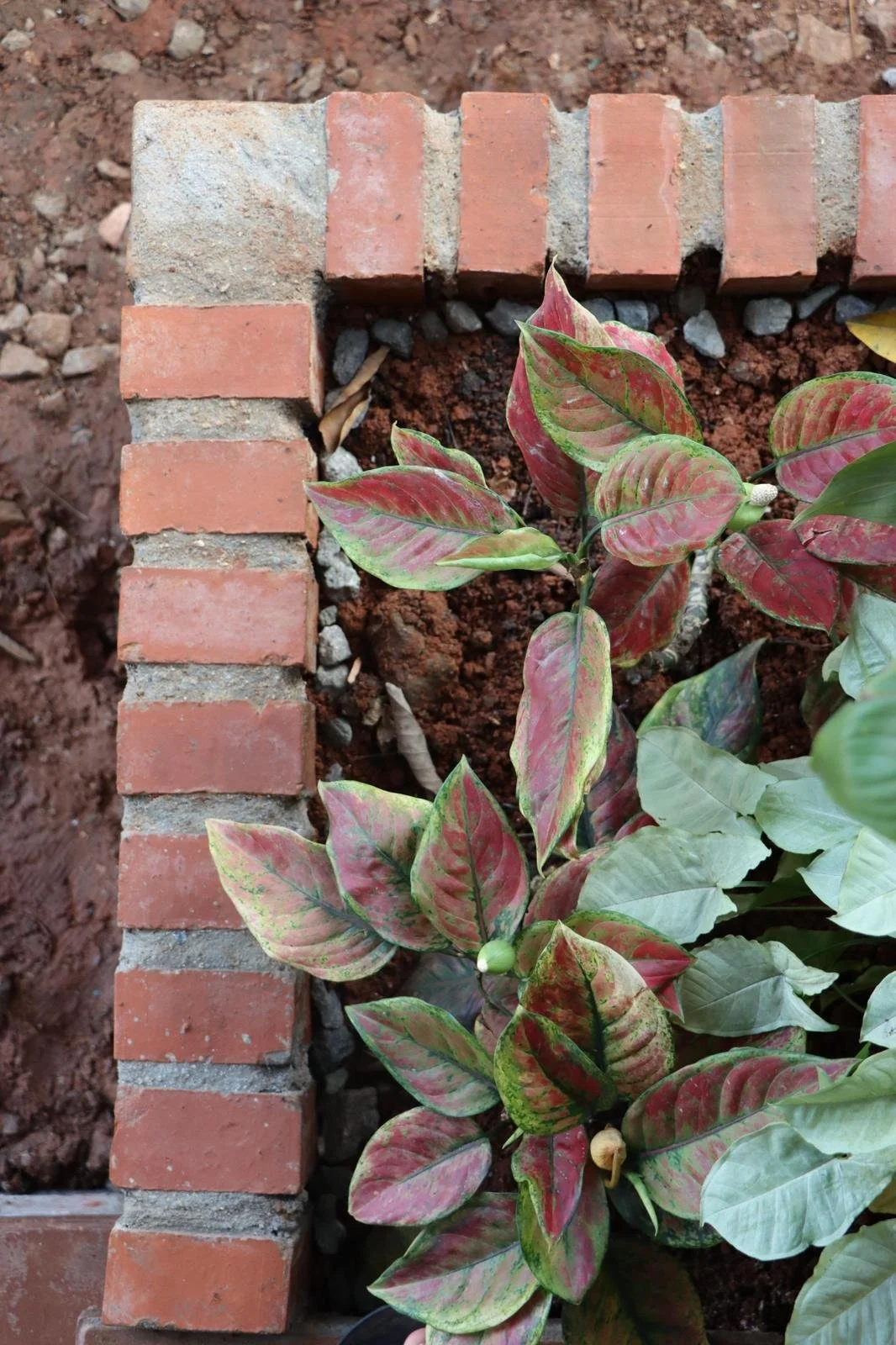
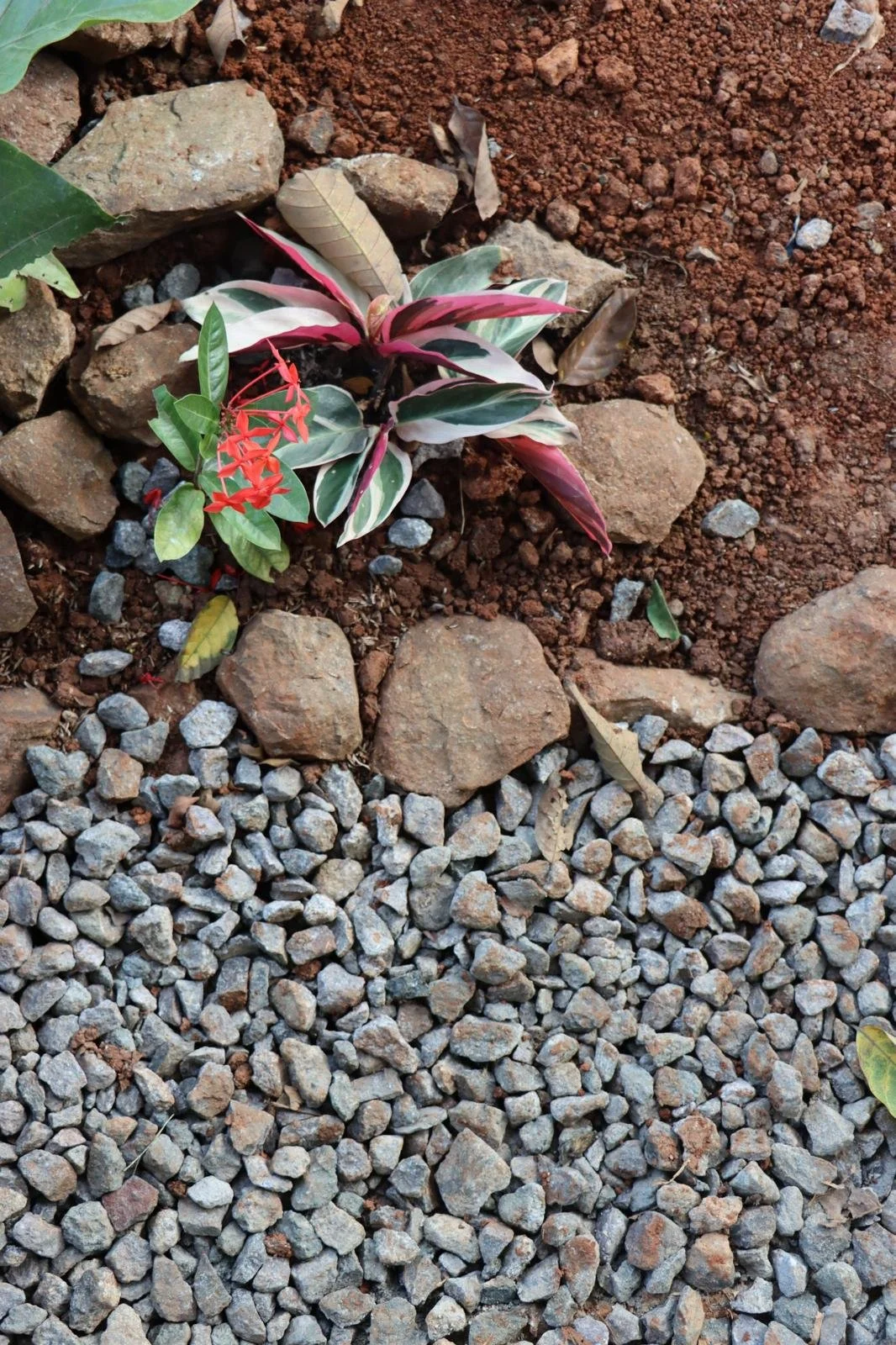
The design was an active and moving feast. Aspirations from the local community and charity staff were developed and implemented, whilst on site. As the building project came nearer to completion, smaller details like the bracing, handrails, landscaping, steps, brick coursing and much more were co-designed to feel more in-keeping with the context around it.
Throughout the 8-week construction process, international participants worked alongside local workers, learning from each other and sharing skills in a collaborative build that reinforced the project's community-centred ethos. Despite unexpected site conditions and the logistical challenges of building within a remote forest patch, the team delivered a beautiful space that will serve nature, people and the forest, as the charity have always intended.
This project stands as a quiet counterpoint to the everyday - a place where nature and architecture meet to support those that cannot always protect themselves. It’s a space of connection, bringing human beings and nature together harmoniously.
We would like to say a huge thank you to all those that contributed to this project by way of participation, expert consultation, donation, supply of materials or just a helping hand! A special mention to Bayu, Agung, Basuki and Amir for always driving the project forwards and going the extra mile to ensure that the whole team had an incredible experience!
Special thanks to Melissa, Maxime, Eva, Megan and Nicolas from Buro Happold
www.stfuinjakarta.org/